
Whatever it is that stops you boarding - you're not the only one.
Aviophobia affects around 1 in 3 people to some degree... but here's what most don't realise: it's rarely just "fear of flying" as a single thing.
In my experience working with clients across the world, anxiety regarding flying almost always comes down to something more specific - a particular moment, sensation or thought that triggers the fear.
Understanding exactly what your fear is about, is the first step to doing something about it.
The Three Most Common Flying Fears
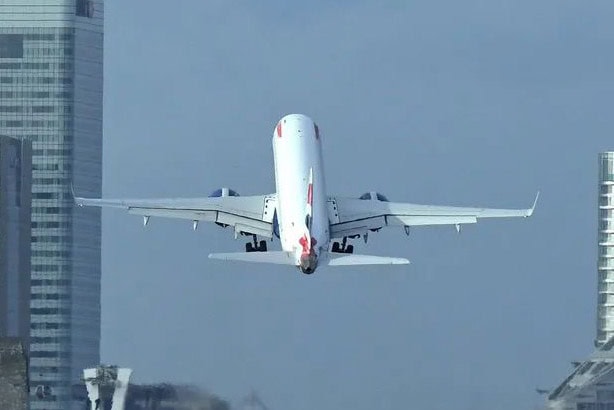
1. Fear of Takeoff
For many, the moment the plane accelerates down the runway is the hardest part of the entire journey. The sudden loss of control, the noise, the point of no return - it can feel overwhelming before the wheels have even left the ground.
What surprises most is how much of this fear is rooted in the unknown rather than a genuine danger. Takeoff is actually one of the most precisely managed phases of flight - but your nervous system doesn't know that unless someone explains it properly.

2. Fear of Turbulence
Turbulence is, by some distance, the thing I'm asked about most. And understandably so - there's something uniquely unsettling about an aircraft moving in ways you don't quite expect.
The gap between what turbulence feels like and what it actually is from a pilot's perspective is enormous. Most passengers are never given that context.
In my sessions, closing that gap is often one of the most powerful moments.
3. Fear of Losing Control
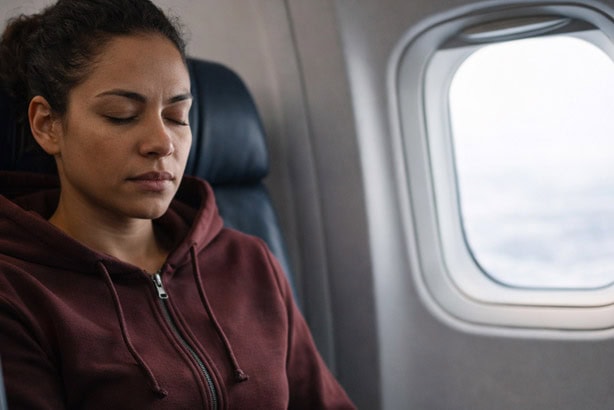
This one often surprises people - because it's not always about the aircraft at all. For many nervous flyers, the real fear is the feeling of being completely unable to influence what happens next. No exit. No steering wheel. No way out.
This is fundamentally a psychological fear rather than an aviation one, which is where the therapy side of what I do becomes especially important. Understanding why this feeling is so powerful - and learning to genuinely release it - changes everything.
Other Common Fears

Fear of Landing
For some of my clients, it's not takeoff that's the problem - it's the approach. The gradual descent, the changes in engine noise, the feeling that the ground is rising faster than it should. And then the moment of touchdown itself - that bump, that noise of reverse thrust, the sudden deceleration.
What makes landing particularly unsettling for many is how different it feels to takeoff. Takeoff is powerful and fast. Landing involves a long, gradual build of anticipation - sometimes forty minutes or more of slowly coming down, with plenty of time for the mind to work against you.
The reassuring truth, is that modern approaches are incredibly precise - far more so than most passengers realise. But as with so much of flying fear... knowing that and feeling it are two very different things.
Fear of Aircraft Noises & Engine Sounds
Clunks, whirrs, changes in pitch, the sudden silence of engines adjusting - aircraft make a remarkable number of sounds, and almost none of them are ever explained to passengers.
Your brain is wired to treat the unknown as a potential threat. So when you hear something unexpected and nobody around you reacts, the silence of the cabin crew becomes its own source of anxiety. Do they know something I don't? Are they trying to stay calm?
I've worked with many clients whose aviophobia was triggered almost entirely to sounds - not the flying itself. Once those sounds have a name and an explanation, something shifts quite quickly. It's one of the many areas where my pilot background makes an instant, direct difference.
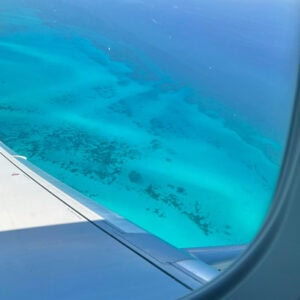
Fear of Flying Over Water
There's something about the coastline disappearing that changes everything for some. Over land, there's always somewhere to go. Over open water, that option vanishes - and with it, a sense of safety.
This fear is more common than most people admit, and it follows a very recognisable pattern. It's not normally a rational calculation about the aircraft's ability to fly over water - it's a deeply felt sense of exposure and vulnerability that kicks in the moment the sea replaces the ground below.
Understanding that pattern - where it comes from, and why it feels so different to flying over land - is a significant part of the work we do together. And for many clients, it's one of the fears that responds particularly well to my therapeutic approach.
Fear of Claustrophobia on Planes
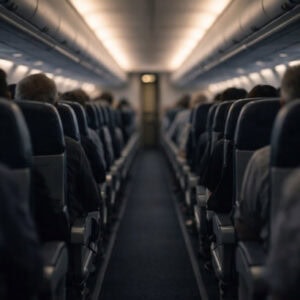
The narrow aisle. The fixed seat. The window that is fixed shut, and the door that won't open until you land. For someone who experiences claustrophobia, a flight isn't just uncomfortable - it can feel genuinely unbearable.
What makes this particularly challenging is that the usual response to claustrophobia - removing yourself from the situation - simply isn't available at 35,000 feet. And knowing that in advance is often enough to make the anxiety begin long before the flight itself.
This is something I work with regularly, and it responds very well to the right approach. A significant part of the work involves changing the relationship with the feeling of confinement itself - so that the cabin stops feeling like a trap, and starts to become a manageable environment.
Fear of Heights While Flying
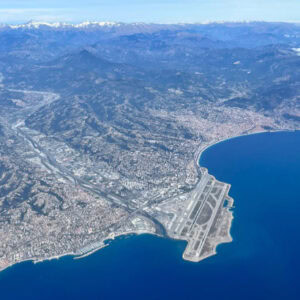
Fear of heights and fear of flying are genuinely two separate things - but they overlap more often than you might expect. Looking out of the window and feeling your stomach drop, or deliberately keeping the blind down for the entire flight, are both signs that height is playing a key role in your flying anxiety.
What's interesting is that height isn't the whole story. It's usually a combination of height, exposure and the feeling of having no solid ground beneath you that creates the response. And because those feelings are very physical - the dropping sensation, the lightheadedness - they can be hard to reason your way out of.
The good news is that this is exactly the kind of deeply physical, subconscious response that fear of flying hypnotherapy is particularly well suited to working with.
Health Anxiety & Flying
The aircraft itself isn't really the issue for some of my clients. The fear is about what might happen to them while they're on it. A panic attack with nowhere to go. A medical episode far from help. The feeling of being trapped in a body that might let them down, thousands of miles from anyone who can help.
Health anxiety and flying is a common combination - and it tends to manifest in a particularly exhausting way. The anxiety about having anxiety becomes its own problem. The anticipation of a panic attack can feel almost as distressing as the panic attack itself.
The therapeutic tools I use - particularly solution focused hypnotherapy - can make a very real difference. Not by suppressing the fear, but by changing the relationship at a deeper level, so it gradually loses its grip.
What All of These Fears Have in Common
Here's something I've noticed across years of working with nervous flyers:
Almost every fear... however specific it feels - comes back to the same two things: The unknown, and the feeling of being out of control.
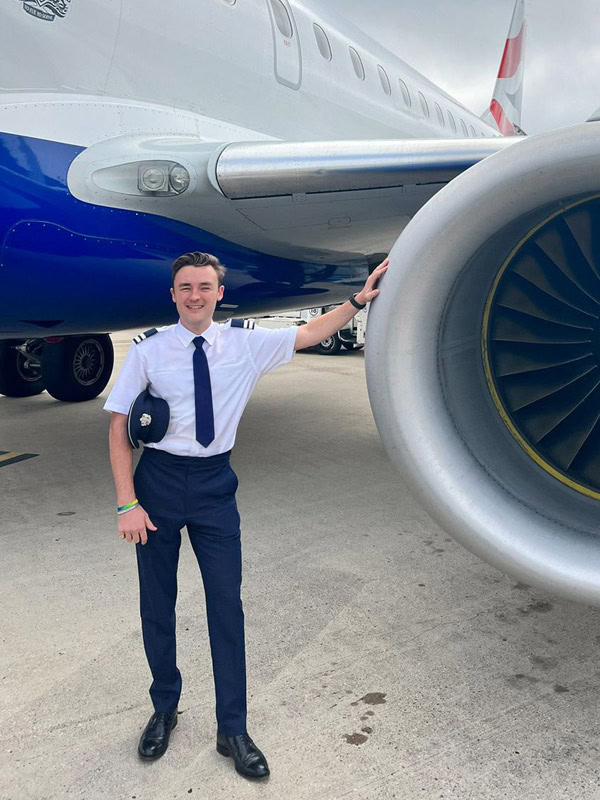
My approach addresses both: As a pilot, I replace the unknown with genuine understanding. As a therapist, I work with the deeper patterns that keep the fear alive - even when the facts are there.
"I was able to book my flight without feeling overwhelmed. I stayed calm during the trip, which was a huge win for me!"
Where Would You Like to Start?
- Book a Pre-Flight Confidence Call: A relaxed 30-minute call to talk through exactly what flying feels like for you - and what working together could look like.
- Free Guided Meditation Download: Calming audio guiding you through a gentle reset for both body and mind – using breath, grounding techniques, and subconscious reassurance.